


Power of the pen
Reimagining Documentation with Clarity, Confidence, and Clinical Integrity
Thank you for attending Power of the Pen: N.O.T.E. This page was created as a companion resource to help you continue reflecting on the role documentation plays in ethical, effective, and professional practice.
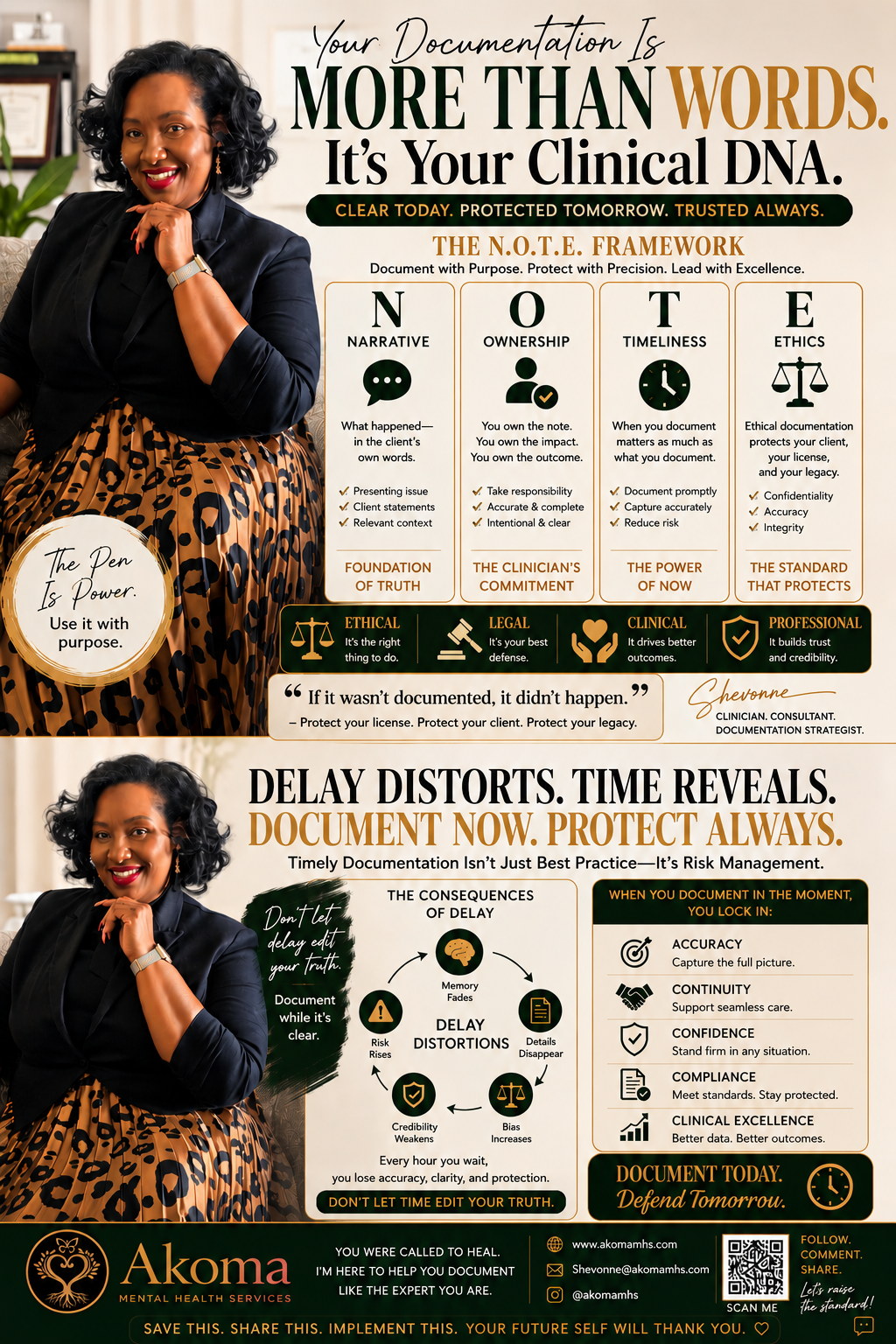
Documentation is more than a task. It is your professional voice on record. Through the N.O.T.E. framework, we explore how to write with greater clarity, responsibility, timeliness, and ethical intention.
Narrative
✳︎
Ownership
✳︎
Timeliness
✳︎
Ethics
✳︎
Narrative ✳︎ Ownership ✳︎ Timeliness ✳︎ Ethics ✳︎
the N.O.T.E. Framework
The N.O.T.E. Framework is a practical approach to professional documentation that encourages clinicians to write with clarity, confidence, and integrity. Through the pillars of Narrative, Ownership, Timeliness, and Ethics, participants learn how documentation reflects not only client care, but also professional judgment and accountability. N.O.T.E. challenges helping professionals to move beyond “just completing notes” and begin documenting with purpose and intention.
-
What it means:
Narrative is the story you tell through your documentation. It reflects how you capture the client’s experience, your clinical observations, and the context surrounding the interaction.Why it matters:
Your narrative is more than just “what happened”, it shapes how others understand the client, informs treatment decisions, and serves as a legal and ethical record of care. A strong narrative provides clarity, continuity, and credibility. -
What it means:
Ownership is your professional responsibility for what you document. It reflects how you stand behind your clinical judgment, interventions, and the accuracy of your note.Why it matters:
Documentation is not passive, it is a reflection of your decision-making and professional integrity. Owning your note means you are accountable for the care you provide and how it is communicated. This is critical for continuity of care, collaboration, and legal protection. -
What it means:
Timeliness is how quickly and accurately documentation is completed after a client interaction. It ensures that the record reflects what actually occurred, while it is still fresh, clear, and complete.Why it matters:
Time impacts truth. The longer you wait, the more details fade, distort, or get unintentionally omitted. Timely documentation protects the integrity of the record, supports continuity of care, and reduces clinical and legal risk. -
What it means:
Ethics is the moral and professional responsibility that guides how and what you document. It ensures your documentation is honest, respectful, accurate, and aligned with professional standards.Why it matters:
Documentation is not just clinical, it is ethical. Every note reflects how you honor the dignity, privacy, and humanity of the client. Ethical documentation protects the client, the clinician, and the integrity of the profession.

Continue the work
Use this page to stay connected, access future resources, and bring this training to your organization or team.

This presentation can be adapted for:

* Social workers
* Therapists and counselors
* Case managers
* Supervisors
* Human service professionals
* Behavioral health teams

Training topics may include documentation confidence, ethical note writing, clinical language, professional accountability, and reducing documentation anxiety.
Work with Us
Akoma Mental Health Services provides mental health education, professional consultation, clinical supervision, and community-centered trainings designed to strengthen confidence, clarity, and purpose in practice.
To inquire about workshops, trainings, consultation, or speaking opportunities, please complete the contact form.